Summary
Xense Robotics has recently completed two consecutive strategic financing rounds totaling hundreds of millions of RMB.…

Xense Robotics has recently completed two consecutive strategic financing rounds totaling hundreds of millions of RMB. Investors include Lanchi Ventures, a prominent dual-currency fund, a fund under CICC CAPITAL, Eminence Ventures, and other leading institutions. Completing two rounds within months reflects sustained interest from investors and industry partners in tactile intelligence and Xense's commercialization progress.
Xense previously announced a financing round worth more than RMB 100 million, backed by leading embodied AI industry investors, Tianji Capital, and Jide Electric. Its shareholder base now includes financial investors such as GLVentures, ORIZA SEED, and FORTERA CAPITAL, as well as industry leaders including Li Auto, AgiBot, and Jide Electric. Several institutions have invested in multiple rounds.
The new funding will primarily support product upgrades, business expansion, and industrial deployment. Xense will accelerate the development and scaled delivery of high-precision visual-tactile sensors; strengthen real interaction data collection, tactile simulation, and dataset development; advance tactile embodied models and tactile world models; and apply tactile intelligence in more real-world settings.
01. From Tactile Sensing to Deeper Physical Interaction Intelligence
Xense is developing key capabilities for real robotic interaction: scaled delivery of high-precision tactile sensors, production of real interaction data, tactile simulation, and tactile-native models. Its technology portfolio now runs from visual-tactile sensors and the XTac data collection system through Xense Sim tactile simulation and the TacVerse Dataset to the X-TouchMind V1 tactile embodied model. The company is also advancing tactile world models toward deployment and commercialization, exploring how they can anticipate interaction outcomes and improve manipulation decisions.
Rather than stopping at sensing hardware, Xense extends tactile capabilities into data production, model understanding, and interaction decisions, building a full-stack system for real physical interaction. That system spans the whole task: sensors capture contact; data records interaction experience; and models interpret contact states, predict the consequences of actions, and support adjustments.
Next, Xense will jointly validate sensing, data, and models in contact-intensive tasks such as precision assembly, dexterous manipulation, and tactile inspection, accelerating the shift from technology development to product delivery and industrial use.
02. Building a Tactile Data Loop from Research to Industrial Application
Xense was founded in May 2024 by Dr. Ma Daolin, a Shanghai Jiao Tong University professor and recipient of the sole Best Paper Award at ICRA 2021. Dr. Ma earned his undergraduate and doctoral degrees at Peking University and completed postdoctoral research at MIT under Alberto Rodriguez, a leading researcher in robotic manipulation and tactile sensing, formerly an associate professor at MIT and now Head of Robot Behavior at Boston Dynamics.
Before founding Xense, Dr. Ma's team had worked in tactile sensing for more than a decade. It was among the first research teams worldwide to systematically propose the theory of “tactile spatial intelligence,” and its research appeared on the cover of the International Journal of Robotics Research (IJRR).
Today, Xense has a full-stack “hardware–data–model” technology system for physical interaction and continues to validate and deploy its products in real settings.
Hardware: Xense has developed high-precision, three-color-light visual-tactile sensors that simultaneously output multidimensional force, motion, slip, and 3D topography information. Production has reached the tens-of-thousands-of-units scale.
Data: Xense's XTac UMI G1 wearable data collection device captures real physical interaction data and is paired with the large-scale TacVerse Dataset of real tactile interactions. The company also generates physical interaction data through tactile simulation. Combining real and simulated data reduces acquisition costs and improves model training efficiency.
Models: Xense has developed X-TouchMind V1, a Vision-Tactile-Language-Action (VTLA) multimodal model, alongside other multimodal tactile models, bringing touch into perception, decision-making, and action generation.
From foundational sensing to higher-level intelligence, Xense is among the few tactile technology companies with the capacity to produce tens of thousands of sensors per month while developing its own embodied tactile models, real-world datasets, and tactile simulation. It continues to build a full-stack ecosystem for physical interaction.
03. Proving Product Value in Customer Tasks
Xense has served more than 300 paying customers across robotics, industrial manufacturing, consumer brands, and research institutions. Purchases and continued collaboration give its product teams feedback grounded in real needs.
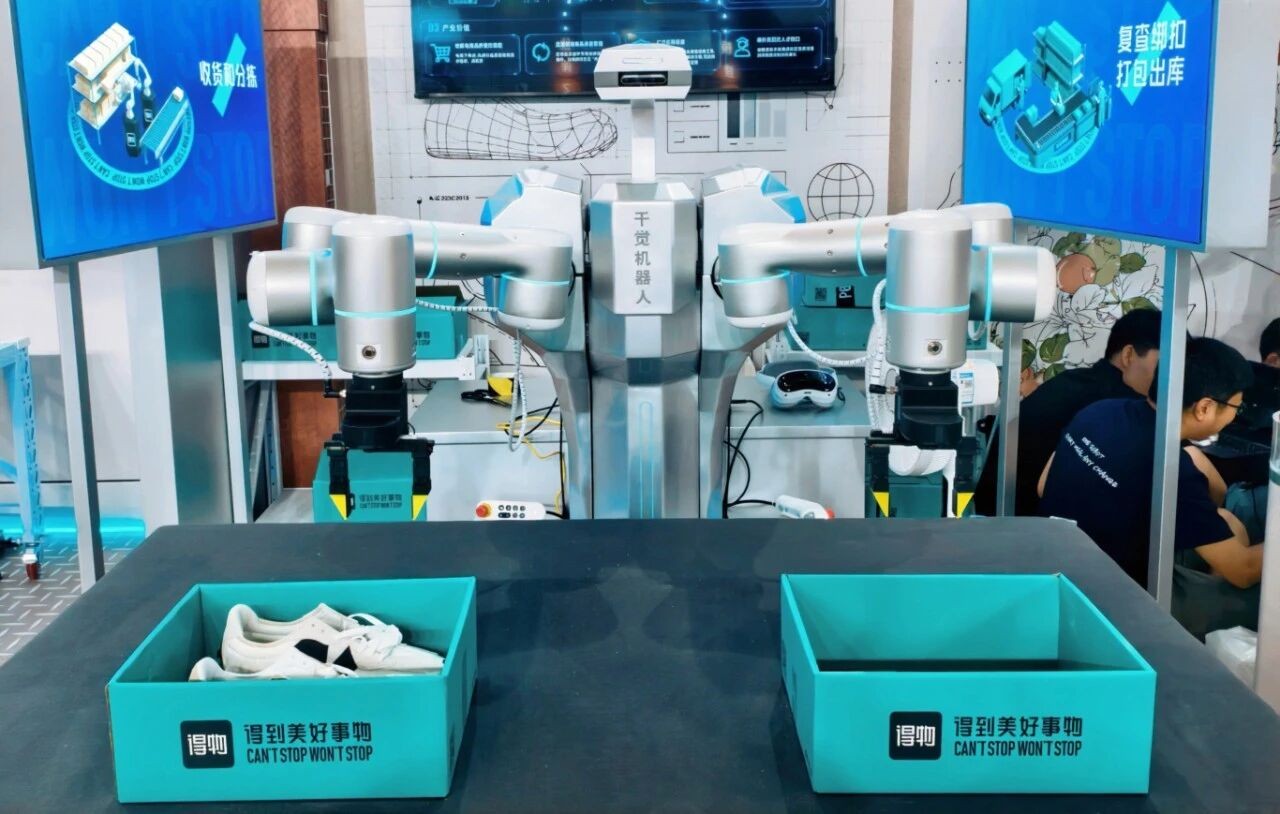
In industry and consumer applications, Xense is validating embodied models with CATL, developing a logistics solution with L'OREAL, and demonstrating product authentication with Dewu. It adapts products and validates solutions for different tasks, steadily building experience in assembly, logistics, inspection, and related uses of touch.
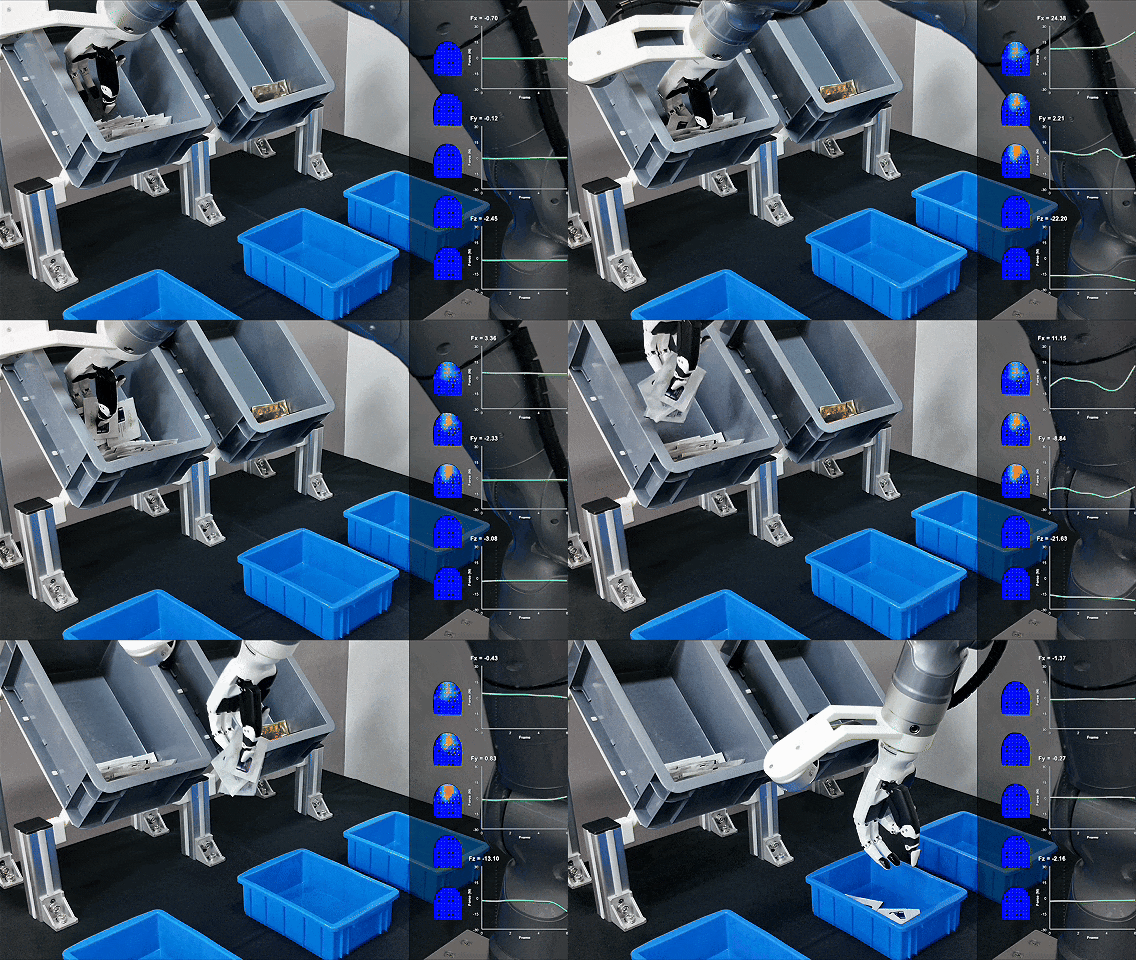
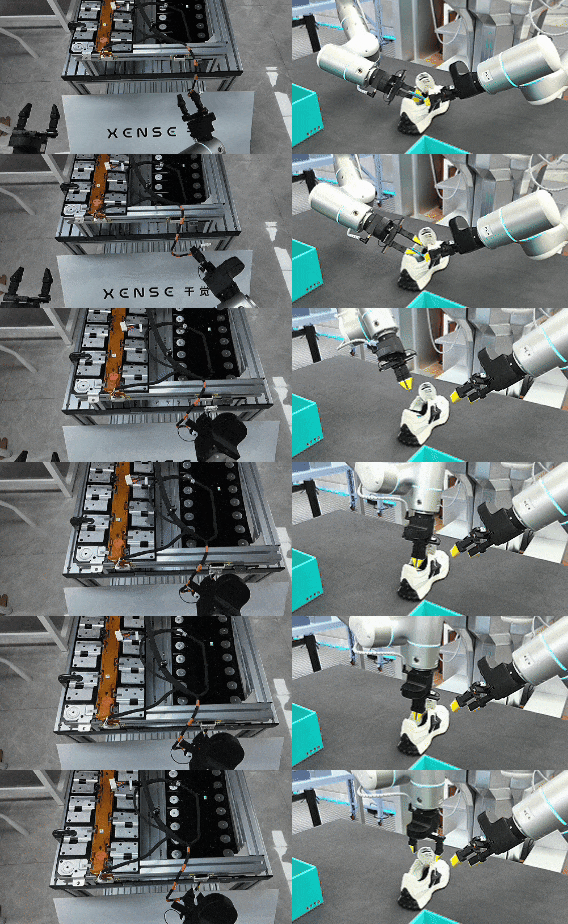
From equipment purchases and joint validation to delivered applications, Xense puts product performance at the center of its work and uses actual customer tasks to guide R&D and iteration of sensing products, collection tools, and models.
04. Investment and Industry Collaboration Deepen the Value of Touch
This round's investors include Lanchi Ventures, a fund under CICC CAPITAL, and Eminence Ventures. They have long followed technological innovation, AI, and advanced industries and bring investment experience and industry resources in these fields.
The Lanchi Ventures investment team said: “We have long followed the journey of robotics and AI from laboratories into real applications. Tactile sensing is a critical capability for robots performing fine manipulation. The Xense team has shown an uncommon long-term commitment and depth of technology in this field. It combines rigorous research with the ability to turn technology into products and deliver them at scale. We value the team's ability to solve difficult engineering problems and make frontier technologies usable. As embodied AI enters real settings, we believe Xense has an opportunity to become an important provider of foundational tactile intelligence.”
The investment team at a fund under CICC CAPITAL said: “The tactile sensing industry is entering a critical stage, moving from technology validation to scaled delivery. Mass-production capacity for sensors, supply-chain coordination, and an industrial customer base will be essential to further growth. Xense has established a foundation in these areas and earned recognition from robotics and industry partners. As downstream demand grows, we see substantial room for the company to develop.”
The Eminence Ventures investment team said: “As robotic applications extend into fine manipulation, the commercial value of tactile sensing is becoming clearer. The sector combines high technical barriers with broad potential uses. Companies that keep building core technologies and respond to customer needs can establish lasting advantages. The Xense team combines research strength with product awareness. It has developed complementary capabilities in sensors, data collection, and models and earned the confidence of many paying customers. We are optimistic about its ability to expand product applications and realize the commercial potential of tactile intelligence.”
05. Linking Sensing, Data, and Models Around Real Tasks
The funding will help Xense increase its capacity for scaled delivery and customer service. Working from specific tasks defined with industry partners, it will jointly validate collection tools, data processing, and model applications, turning technology into products and solutions that can be delivered sustainably.
Reliable sensing records contact. High-quality data accumulates experience. Models support real manipulation. Xense will continue to strengthen the connection between tactile sensing, data, and models and bring tactile intelligence into more industrial settings.